Skip to product information
1 of 3

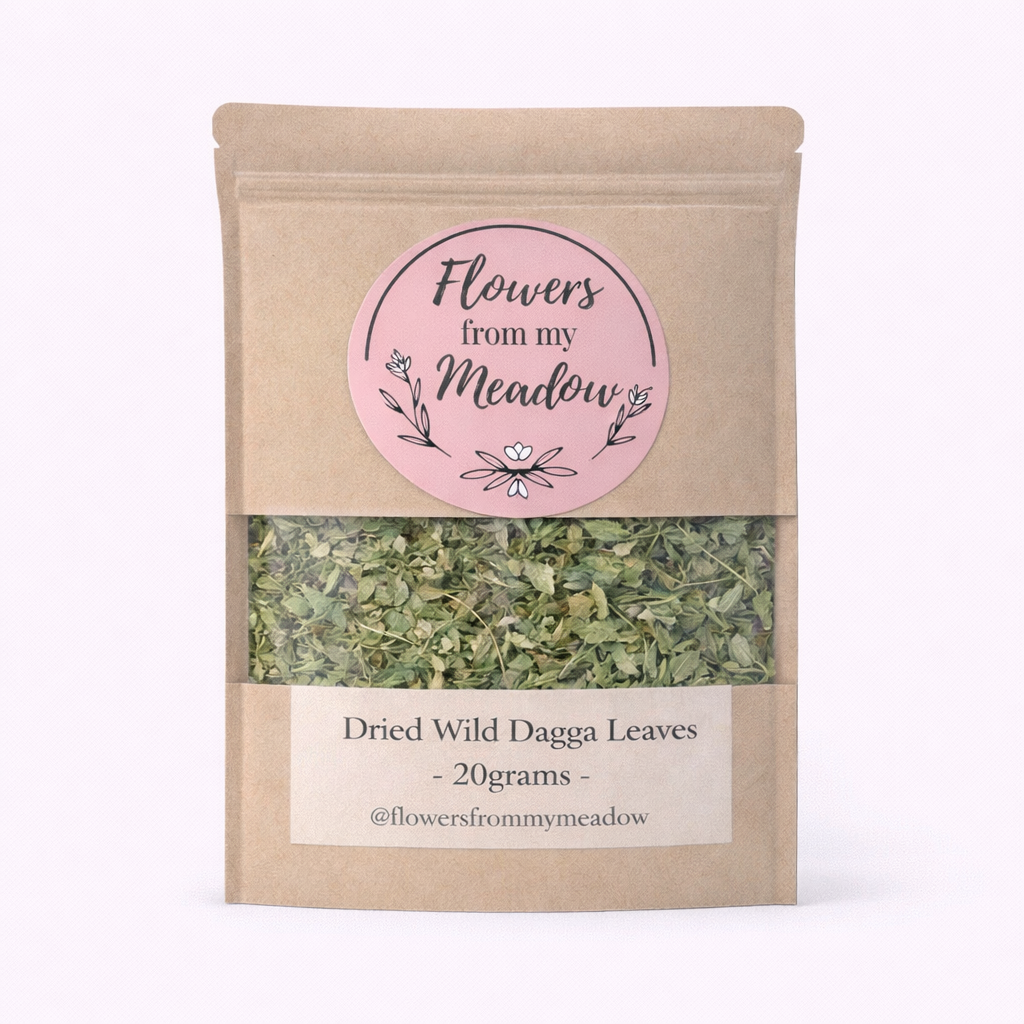
Dried Wild Dagga Leaves

Dried Wild Dagga Leaves

Leonotis leonurus · Traditional South African Botanical · Dried Leaves for Herbal Preparations

25 in stock

Regular price R 36.00 ZAR
Regular price Sale price R 36.00 ZAR
Sale Sold out
Taxes included. Shipping calculated at checkout.
Quantity

A distinctive South African botanical with a long history of traditional use.

Wild Dagga (Leonotis leonurus), also known as Lion's Ear or Lion's Tail, is an indigenous southern African plant recognised for its striking orange flowers and aromatic leaves.

Our Dried Wild Dagga Leaves are supplied as a single botanical for traditional herbal preparations. The dried leaves have an earthy, herbaceous character and can be prepared as a botanical infusion or used in other traditional herbal preparations.

Wild Dagga has a fascinating place in southern African botanical tradition and naturally contains a range of plant compounds that continue to make Leonotis leonurus a botanical of interest.

At Flowers from my Meadow, we keep it simple and uncomplicated: dried Wild Dagga leaves, carefully packed for your home botanical apothecary.

How to Prepare as a Botanical Infusion

Add 1–2 teaspoons of dried Wild Dagga leaves to 1 cup of freshly boiled water. Allow to steep for 10–15 minutes, then strain.

Size: 20 g resealable kraft pouch.

Storage: Store sealed in a cool, dry place away from direct sunlight.

Important: Not recommended during pregnancy or breastfeeding. If you take medication or have an existing medical condition, consult an appropriate healthcare professional before use.

Continue below to discover Wild Dagga's botanical story, traditional context, botanical profile and preparation.

    View our Return & Refund Policy

    Our Quality Promise

    View our Shipping Policy

    Every botanical wellness journey is unique. These reviews share the personal experiences of our customers and are offered to help you make an informed decision. While everyone's experience is different, we hope these stories give you confidence as you begin your own journey.

    View full details

    Wild Dagga at a Glance

    An indigenous southern African botanical with a long history of traditional use, Wild Dagga (Leonotis leonurus) is recognised for its distinctive leaves, striking orange flowers and place within southern African botanical traditions.

    Botanical

    Wild Dagga
    Leonotis leonurus

    Also Known As

    Lion’s Tail
    Carefully prepared for traditional botanical use.

    Plant Part

    Dried Leaves
    Carefully dried and prepared as a single botanical.

    Preparation

    Herbal Infusion
    Traditionally prepared by steeping the dried leaves in hot water.

    Flavour

    Earthy & Herbaceous
    A distinctive naturally bitter botanical character.

    Southern African Botanical

    20 g
    Carefully packed by Flowers from my Meadow for your home botanical apothecary.

    Discover Wild Dagga

    Curious about Wild Dagga? Discover what makes this distinctive southern African botanical different, how the dried leaves can be enjoyed and a few useful things to know before preparing your first cup.

    What Makes Wild Dagga Distinctive?

    Wild Dagga is one of southern Africa’s most recognisable indigenous botanicals, known for its tall growth, aromatic foliage and striking whorls of orange tubular flowers.

    Is It Really a Dagga Plant?

    Despite its common name, Wild Dagga is not cannabis. Wild Dagga is Leonotis leonurus, a member of the mint family, Lamiaceae, and is botanically distinct from Cannabis sativa.

    Can I Brew the Dried Leaves?

    Yes. The dried leaves can be prepared with hot water as a traditional herbal infusion, often referred to simply as Wild Dagga tea.

    What Is the Cup Like?

    The prepared infusion has an earthy, herbaceous character with a naturally bitter edge — quite different from a delicate or naturally sweet herbal tea.

    Can I Add Anything to It?

    Yes. If you find the natural bitterness too pronounced, the prepared infusion can be enjoyed with a little honey or fresh lemon according to taste.

    Does It Contain Caffeine?

    No. Wild Dagga contains no traditional tea leaves and the prepared herbal infusion is naturally caffeine-free.

    White Willow bark botanical editorial

    The Story Behind Wild Dagga

    Across the South African landscape, Wild Dagga has long been one of our most distinctive indigenous botanicals.

    Known botanically as Leonotis leonurus, this striking member of the mint family grows as a tall, aromatic shrub, producing slender leaves and remarkable whorls of vivid orange tubular flowers. These nectar-rich blooms are especially attractive to sunbirds, bringing movement and colour to the landscapes where the plant grows.

    Its botanical name tells part of its story. Leonotis comes from words meaning “lion” and “ear”, inspired by the shape of its softly haired flowers — a connection also reflected in the familiar name Lion’s Ear.

    Wild Dagga has a long history within southern African botanical traditions, where different parts of the plant have been prepared in a variety of ways. The dried leaves can also be brewed in hot water to create a distinctly earthy and herbaceous botanical infusion.

    Its story eventually travelled far beyond southern Africa. Leonotis leonurus became known internationally as an ornamental plant, appearing in European gardening literature as early as the seventeenth century.

    For us, Wild Dagga represents something particularly special: a botanical deeply connected to the landscapes of southern Africa. Carefully dried and packed as a single botanical, it offers an opportunity to discover a plant whose story begins much closer to home.

    Wild Dagga Botanical Profile

    Meet the distinctive southern African plant behind Wild Dagga and discover the botanical characteristics that define Leonotis leonurus.
    Wild Dagga botanical profile
    Common Name:
    Wild Dagga
    Scientific Name:
    Leonotis leonurus
    Plant Family:
    Lamiaceae
    Plant Type:
    Perennial, soft-woody shrub
    Part Used:
    Dried aerial parts, predominantly leaves and smaller stems
    Botanical Character:
    Wild Dagga is a distinctive upright shrub with aromatic foliage, square stems and striking rounded whorls of tubular flowers.
    Flavour Profile:
    Earthy, herbaceous and naturally bitter.
    Flowers:
    Most commonly vivid orange, with tubular flowers arranged in distinctive rounded clusters around the stems.
    Leaves:
    Narrow, aromatic leaves with toothed margins and softly textured undersides.
    Traditional Context:
    Wild Dagga has a long history within southern African botanical traditions, where different parts of Leonotis leonurus have traditionally been prepared in a variety of ways.
    Preparation Style:
    The dried botanical material can be prepared in hot water as a traditional herbal infusion.
    Naturally Caffeine-Free:
    Wild Dagga contains no traditional tea leaves and is naturally free from caffeine.
    BOTANICAL PREPARATION

    How to Prepare Wild Dagga Tea

    Wild Dagga leaves are prepared as a simple herbal infusion. Because the dried leaves and smaller stems are more delicate than bark or roots, they are steeped in freshly boiled water rather than simmered.
    Measuring dried white willow bark
    STEP 1

    Measure the Wild Dagga

    Add 1–2 teaspoons of dried Wild Dagga for each cup you would like to prepare.

    Adding white willow bark to water
    STEP 2

    Add Freshly Boiled Water

    Place the measured Wild Dagga in your cup or teapot and pour freshly boiled water over it.

    Simmering white willow bark
    STEP 3

    Allow to Steep

    Cover and allow the infusion to steep for 10–15 minutes.

    Straining white willow bark tea
    STEP 4

    Strain & Serve

    Strain the dried botanical material from the infusion and pour into your cup.

    Unlike tougher botanical materials such as bark and roots, dried Wild Dagga leaves are prepared by steeping them in hot water to create a traditional herbal infusion.
    THE MEADOW KITCHEN

    Simple Ways to Explore Wild Dagga

    Wild Dagga has a distinctive earthy, herbaceous and naturally bitter character. Enjoy it simply as an infusion or combine it with complementary botanicals, citrus and honey to create different botanical tea rituals.
    The Simple Wild Dagga Cup

    The Simple Wild Dagga Cup

    Start simply and discover the naturally robust, herbaceous character of Wild Dagga on its own.
    Ingredients
    • 1–2 teaspoons dried Wild Dagga
    • 1 cup freshly boiled water
    Method

    Pour freshly boiled water over the Wild Dagga, cover and steep for 10–15 minutes. Strain before serving.

    Wild Dagga, Rooibos & Orange

    Wild Dagga, Rooibos & Orange

    Earthy rooibos and bright citrus create a rounded botanical blend while allowing Wild Dagga's distinctive character to remain present.
    Ingredients
    • 1 teaspoon dried Wild Dagga
    • 1 teaspoon loose-leaf rooibos
    • A small piece of dried orange peel
    • 1 cup freshly boiled water
    Method

    Combine the botanicals, pour over freshly boiled water, cover and steep for 10–15 minutes. Strain before serving.

    Wild Dagga, Mint & Lemon

    Wild Dagga, Mint & Lemon

    Aromatic mint and fresh citrus bring brightness to the naturally earthy character of Wild Dagga.
    Ingredients
    • 1 teaspoon dried Wild Dagga
    • 1 teaspoon dried peppermint
    • Fresh lemon
    • 1 cup freshly boiled water
    Method

    Combine the Wild Dagga and peppermint, pour over freshly boiled water and steep covered for 10–15 minutes. Strain and finish with a small squeeze of fresh lemon.

    Wild Dagga, Honey & Ginger

    Wild Dagga, Honey & Ginger

    A warming botanical cup pairing the robust character of Wild Dagga with aromatic ginger and gentle sweetness.
    Ingredients
    • 1 teaspoon dried Wild Dagga
    • 2–3 thin slices fresh ginger
    • 1 cup freshly boiled water
    • Honey, to taste
    Method

    Combine the Wild Dagga and ginger, pour over freshly boiled water and steep covered for 10–15 minutes. Strain, allow to cool slightly and add honey to taste.

    Begin with a simple Wild Dagga infusion, then experiment with complementary botanicals to discover the combinations you enjoy.

    GOOD TO KNOW

    Questions About Wilde Dagga

    From its unusual name to preparing your first cup, here are answers to some of the questions you may have about Wild Dagga.
    • Wild Dagga is the common name for Leonotis leonurus, a distinctive southern African botanical belonging to the mint family, Lamiaceae. It is recognised by its aromatic foliage and striking whorls of tubular orange flowers.
    • No. Despite the word “dagga” in its common name, Leonotis leonurus is botanically distinct from cannabis. It belongs to the Lamiaceae family, while cannabis belongs to the Cannabaceae family.
    • Yes. Dried Wild Dagga can be steeped in freshly boiled water to prepare a herbal infusion commonly referred to as Wild Dagga tea.
    • Add 1–2 teaspoons of dried Wild Dagga per cup, pour over freshly boiled water, cover and steep for approximately 10–15 minutes. Strain the botanical material before serving.
    • Wild Dagga has a distinctive earthy, herbaceous and naturally bitter flavour. Honey, lemon, mint, rooibos or other complementary botanicals can be added according to taste.
    • No. Wild Dagga is not made from traditional tea leaves and is naturally caffeine-free.
    • Dried Wild Dagga preparations may use aerial parts of the plant. Our dried botanical consists predominantly of dried leaves with smaller stem material.
    • Leonotis leonurus is indigenous to southern Africa and is particularly associated with the landscapes of South Africa, where it grows as a tall perennial shrub.
    • Keep the dried botanical sealed in a cool, dry place away from direct sunlight and moisture to help preserve its natural character.
    • Yes. Its robust, bitter character can be combined with other botanicals according to taste. Rooibos, peppermint, citrus peel, ginger and honey are some simple additions to explore.

    Still have a question?

    We’re always happy to help. If there’s something you’d like to know about Wild Dagga, its preparation or how to use it, get in touch with us.

    Ask Us a Question

    OUR QUALITY PROMISE

    Botanicals, Kept Pure & Uncomplicated

    We believe beautiful botanicals need very little interference. Our approach is simple: thoughtfully selected plant material, careful handling and honest information about what you’re bringing into your home.

    Thoughtfully Selected

    Botanicals chosen with attention to quality, appearance and suitability for their intended use.

    Carefully Handled

    Handled and packed with care to help preserve the natural character of each botanical.

    Pure & Uncomplicated

    Simple botanicals without unnecessary additions, presented as close to their natural form as possible.

    Packed in South Africa

    Carefully packed by Flowers from my Meadow in South Africa.

    From our meadow to your home, with care.

    CONTINUE YOUR BOTANICAL JOURNEY

    There's More to Discover in the Meadow

    From individual botanicals to handcrafted tea blends, continue exploring the plants, preparations and everyday rituals of Flowers from my Meadow.

    Selection of dried flowers and single botanicals from Flowers from my Meadow

    THE BOTANICAL APOTHECARY

    Explore Single Botanicals

    Discover flowers, leaves, roots and herbs selected for brewing, blending and everyday botanical rituals.

    Explore Botanicals
    Loose-leaf botanical herbal tea with dried flowers and herbs

    LOOSE-LEAF TEA

    Discover Our Botanical Teas

    Explore handcrafted loose-leaf blends created from thoughtfully selected botanicals, flowers and herbs.

    Explore Teas
    Botanical apothecary with dried herbs, flowers and traditional botanical preparations

    FLOWERS FROM MY MEADOW

    Wander Through the Apothecary

    Discover more botanical preparations, traditional favourites and simple plant-led rituals from our meadow.

    Explore the Apothecary